
Max
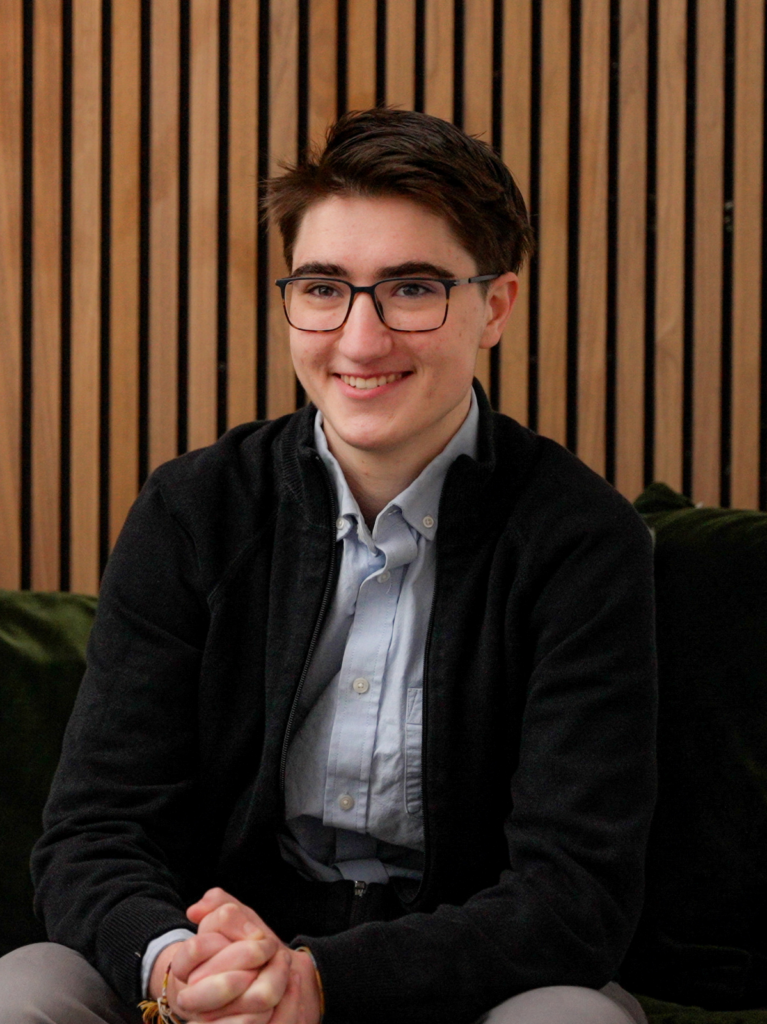
Today, I actually want life. I’m a freshman at Oglethorpe University. I have good relationships with friends and family. I am an artist, and I’m hoping to turn art into a career. But when I admitted to Skyland Trail a few years ago, I was on a different page of my story.
I started high school as an IB student and a star basketball player, but by my junior year I could only manage online school and didn’t leave my house. I was smart, but I didn’t have the answers for why I didn’t want to live anymore. By the time I was 17, I’d had six hospitalizations and been in three IOP treatment programs. Those professionals all said they had the answers. So was it my fault I didn’t get better?
When I got to Skyland Trail, their “answer” was: I had a choice. I could choose to work with my treatment team to find answers together. Or, by doing the same things over and over, I could choose to keep things the same. It didn’t feel like a false promise. I liked their honesty. That gave me hope. Part of the answer was a more accurate diagnosis, which helped explain why a bunch of medications weren’t working. And I could tell the staff cared, from the nurses to the fitness coach to the kitchen staff. The hardest part was accepting their help.
I was trying so hard not to feel, that I wasn’t able to feel anything. One day, something happened that triggered a memory of a past trauma. I couldn’t cope, and I had to be hospitalized. When I came back to Skyland Trail, there was no more hiding. I clearly was not ok. I finally had to confront the pain, fear, and shame that I had been avoiding. It was really hard. As promised, my treatment team worked with me to find “answers.” Everyone tried to modify things for what I could do.
The education specialist helped me with my perfectionism, and my therapist would always adapt things to what would work for me. Family therapy helped my relationship with my dad. Before, I was scared he would leave because I couldn’t be better, and I felt it would be easier to push him away. Now I feel more secure, and even when our conversations are intense, they are more open and effective.
In between all the hard conversations – and it was really hard – we were allowed to be kids. We played soccer, told jokes, and learned dances. I learned how to be a kid again and how to be friends with other kids. I have a lot of life now. I’ve realized that I don’t need all the achievements; I don’t have to prove that I am worthy. If people were approving of a person who wasn’t really me, why does that matter if I’m not happy? I’m going to die being something other people want rather than being human? I want to live a life that I’m actually happy with, and now I am allowing myself to do it.