
Staff Spotlight: Jacob Jett
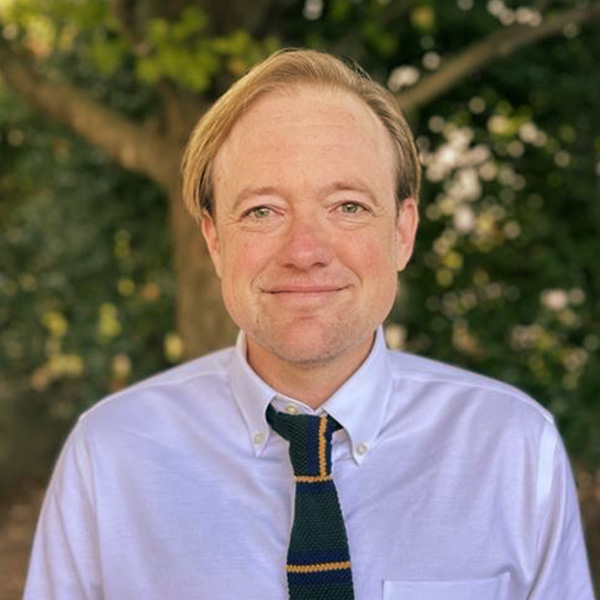
Jacob Jett holds a Master of Divinity (MDiv) with a focus on counseling. He brings over 20 years of experience supporting individuals and families through serious illness, grief, and life transitions. Jacob recently joined Skyland Trail’s adjunctive team as a pastoral counselor.
Can you tell us a little about your background and what inspired you to become a pastoral counselor?
What drew me to becoming a pastoral counselor was my early encounters with grief and the suffering we all meet in life. I’ve always been deeply sensitive, connected to spirituality through nature, and drawn to being in service to others. I also experienced a lot of loss early on. When my mom was diagnosed with cancer in my early teens and then died in my early twenties, it put me on what some people call the “wounded healer” path — someone whose own healing journey becomes the source of their calling to support others.
At 23, I decided to face my fear of grief head-on and started volunteering with hospice. That’s where I learned that turning toward pain — my own and others’ — is heartbreaking, yes, but it also makes room for joy, connection, and beauty in equal measure. It taught me to appreciate my life and the people in it, and to see each day as a gift.
I never imagined I’d be ordained or go to seminary. But when I met an interfaith chaplain through hospice, something in me clicked. I felt a deep internal “yes.” I wanted to be with people in the hardest places of life — in ways that held hope, beauty, and connection alongside grief, loss, and despair. Because I walked this terrain in my own psyche, it felt natural to offer myself as a companion and guide for others.
In my 15 years as an interfaith chaplain, I’ve worked in intensive care units, emergency rooms, behavioral health inpatient settings, skilled nursing facilities, and visited thousands of people in their homes. Yet the heart of my work remains the same wherever I go and with whomever I sit. “Look within—where are you now?” is the question I bring to each person I meet. We can only begin from the truth of where you are, honoring that place fully, before we take our first step together into the mystery of healing and connection—no matter what phase of life you’re in.
What drew you to Skyland Trail specifically?
I’ve always had a strong interest in group work, supporting individuals, and offering the tools that helped me through my own inner struggles. My father was a pediatric social worker who wrote his final dissertation on the benefits of group work in 1975. I have his original leather bond copy, and I look through it even today (!). When I saw that Skyland was actively seeking a pastoral counselor who could serve people of all faiths, no faith, or those questioning — I felt immediately aligned.
My degree is in multireligious studies. My seminary was a consortium of nine different seminaries located within walking distance of each other. My peers were Buddhists, Jews, Muslims, Methodists, Presbyterians, Pagans, Baptists, Jesuits, Franciscans, and a whole spectrum of mystics and seekers. We took classes across traditions, shared meals, lived on campus together, and learned from one another. It was honestly a magical experience and shaped my whole orientation — which has always been interfaith at heart.
My calling has always been to understand as many cultures, religions, and worldviews as I can so I can meet people inside their own language for meaning. And when someone doesn’t have a tradition, I love offering wisdom from across the world that has supported humans for thousands of years. Skyland’s open and inclusive stance felt like a perfect match for how I practice and minister.
How do you describe your pastoral counseling philosophy when working with individuals facing mental health challenges?
This can be tricky because people often come in with assumptions about what a pastoral counselor is — or they’ve been hurt by religion in the past. This is especially true for LGBTQ+ folks and other marginalized communities. There can be fear of judgment or proselytizing.
As a board-certified chaplain through the Association of Professional Chaplains, one of our core values is never imposing our beliefs on anyone. Instead, my work is to help people connect more deeply with their own inner wisdom, values, and traditions. Sometimes that means reclaiming a tradition that once gave them harmful messages and helping them re-shape it into something life-giving. Sometimes it means exploring where their meaning and purpose naturally live — what gives them a sense of belonging, how they want to contribute, what keeps them connected to themselves and to the world.
Together we invite in the mystery and awe of life — noticing synchronicities, moments of unexpected clarity, dreams, art, writing, music, relationships. I come to each person with an open, nonjudgmental presence and honor the beauty of their own inner landscape.
I believe most people already carry the wisdom they need to move forward; sometimes it’s just buried under old messages, shame, or fear. My job is to help them clear away what isn’t theirs and reconnect with what is.
What is your approach to offering spiritual support in a diverse setting with a wide variety of faith traditions (or none at all)?
I see spirituality as the exploration of meaning, connection, and inner grounding — and those things show up in many forms. My approach is always curiosity-first: I ask clients what matters to them, what they grew up with, what shaped them, and what they connect with now. I never assume anything.
I meet people using their language — whether that’s prayer, mindfulness, nature, creativity, philosophy, humor, ancestors, music, or simply being present with another human being. My goal is to honor their worldview, not replace it.
What is something you wish more people understood about the relationship between spirituality and mental health recovery?
I wish more people knew that spirituality isn’t about dogma — it’s about connection, grounding, and meaning. Those things are incredibly stabilizing in recovery. When someone reconnects with what gives their life purpose, or what makes them feel held, or what helps them stay aligned with their values, it creates resilience. It can also help soften shame and open up compassion for the self.
How do you maintain your own well-being and resilience while working with clients?
For me, self-care is a mix of practices. I love losing myself in a good book—Steinbeck and Tolkien are two of my favorite authors. Time in nature, yoga, and even antique shopping (!) help me reconnect with myself. Staying close to my people is also essential. I also really value working on a team; having colleagues I can debrief with, laugh with, helps me stay grounded and clear.
What is a quote, piece of advice, or mantra that inspires you?
“To stay with that shakiness—to stay with a broken heart, with a rumbling stomach, with the feeling of hopelessness and wanting to get revenge—that is the path of true awakening. Sticking with that uncertainty, getting the knack of relaxing in the midst of chaos, learning not to panic—this is the spiritual path.”
—Pema Chödrön, When Things Fall Apart