

We all struggle through times when sleep is in short supply: when college exams, a new baby, or a financial worry prevent us from getting a peaceful night’s rest. But research continues to uncover the consequences of regularly missing out on healthy sleep and the potential perils of sleeping too much. Sleep seems to be…

For decades, youth sports in the United States has been an avenue for kids of all ages to make friends, be physically active, challenge themselves, and learn skills such as teamwork, sportsmanship, and the value of hard work—all of which can provide great stepping stones towards personal growth and achievement later in life. When it…

How do you know if a high-achieving person has a “type A” personality or an anxiety disorder?

Individuals who cut themselves or engage in other self-injurious behaviors often are using this unhealthy coping strategy to deal with emotional pain or confusion that they do not know how to process in any other way. This type of behavior is associated with several diagnoses including anxiety disorders and personality disorders, and patients often have a history of…

Everyone experiences job-related stress. Whether it’s communicating with multiple people, juggling responsibilities or adhering to deadlines, workplace stressors are common. Short-term stressful moments are typical, but experiencing constant or long-term stress can affect your physical and emotional health. What begins as job-related stress can extend to other situations and impact your life outside of work…
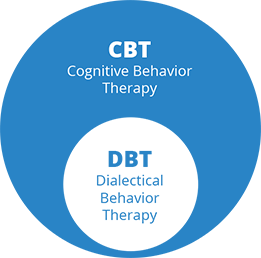
Psychotherapy is one of the best treatment methods available for a number of mental illnesses. One of the most common types of therapy is called Cognitive Behavioral Therapy (CBT). Also called talk therapy, CBT focuses on talking about your problems to help you frame your thoughts differently. If you feel like negative thoughts are always in…

From time to time, we all experience black-and-white thinking or fall into an all-or-nothing frame of mind. For some people, a pattern of black-and-white thinking over time may reinforce a recurring automatic negative thought – “I can’t do anything right” – to the point that it becomes a permanent negative core belief – “I am…

Cognitive behavioral therapy (CBT) can be very effective in reducing anxiety to a manageable level. Check out these tips. 1. Evaluate Distorted Thinking Our thinking influences our anxiety more than we realize. When experiencing anxiety, look for these skewed thinking patterns: seeing situations in all or nothing terms (dichotomous thinking), only viewing what could potentially…
- « Previous
- 1
- 2